
How to Choose the Right Used Industrial Air Compressor for Your Factory
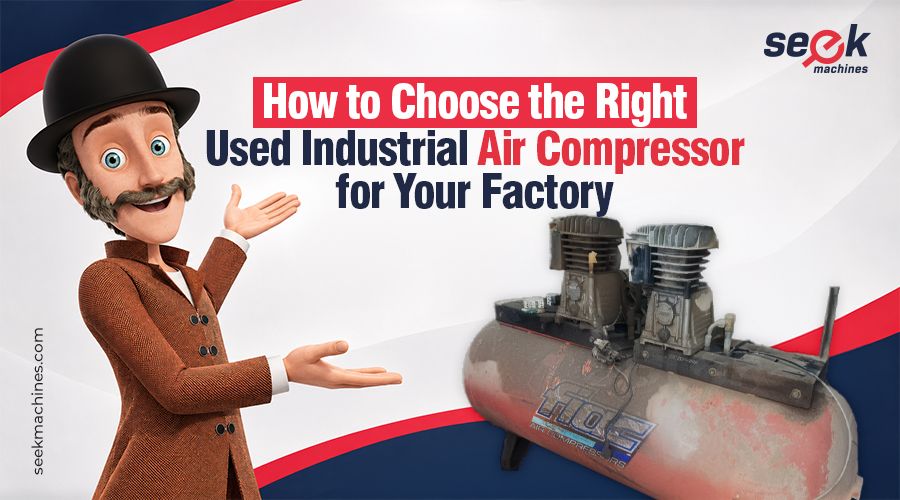
Acquiring a used industrial air compressor allows factories to increase the capacity of pneumatic energy without investing money in purchasing new equipment. Choosing the best pre-owned air compressor needs proper evaluation of airflow capacity, number of hours operated, maintenance history, and mechanical soundness. This article explains all the necessary steps for picking the best industrial air compressor.
Key Takeaways
- Determining the output flow and operating pressure of your compressor helps to avoid unnecessary energy wastage and production interruptions.
- Evaluating the total number of hours run and service records helps to determine the life of the pre-owned compressor.
- Examining the condition of the motor bearing, and air receiver tank allows avoiding mechanical problems in the future.
- Selecting a reputable brand that offers easily obtainable replacement parts helps to ensure quick repairs and long-lasting operation of your plant.
What is a Used Industrial Air Compressor?
A used industrial air compressor is a pre-owned system that transforms electricity into compressed air that is needed by factory machines. Factories acquire such devices from equipment vendors, auctions, or other facilities where equipment upgrading takes place. Evaluation of various compressor models helps to provide constant compressed air to your factory workshop.
1. Rotary Screw Compressors
Rotary screw compressors employ two rotating rotors that provide a constant flow of pressurized air for highly demanding manufacturing processes. The equipment is robust in operation, noiseless, and capable of functioning 24/7 without overheating or any decrease in air pressure.
2. Reciprocating Piston Compressors
Reciprocating compressors have robust pistons operating in cylinders to compress air in workshops where there is intermittent demand for pneumatics. The compressors have simple mechanical structures with lower costs and can operate efficiently in fabrication bays.
3. Oil-Injection and Oil-Free Versions
Oil injection compressors contain lubricating oil which cools and seals internal clearances for all pneumatic tools applications. Oil-free compressors keep the lubricant out of the air flow and thus are vital for production of food and pharmaceuticals.
Selection Criteria and Advantages for a Factory
1. Rated Capacity and Working Pressure
Determining actual airflow and pressure ratings consumed by the pneumatic tools allows you to maintain continuous operation throughout all workstations. Inefficient equipment cannot operate effectively during maximum factory shifts when air tools stop operating and affect the pace of assembly. Installation of the auxiliary buffer will protect your factory from the pressure drop when many machines are operated.
2. Operating Time and Expected Lifespan
Reading an electronic hour counter can help you to understand how intensively the unit was used at the previous workplace before the sale. A high quality rotary screw compressor with a moderate number of operating hours can perform effectively while having a very low price. The comparison of loaded and total time of operation will tell about the efficiency of its work.
3. Maintenance and Service Records
Analysis of service history will show whether the previous owners have performed timely changing of oil filters, air filters and separators cartridges. Such maintenance allows to avoid wear of internal rotors and bearings due to the contaminated oil or clogged air cooler. Purchase of the well documented compressor saves money on unexpected repairs after its installation.
4. Checking Compressor Airend and Electric Motor
The testing of the compressor and electric motor can allow detecting possible mechanical faults before buying the unit. Listening to noise and checking seals of the shaft for oil leak and measuring the motor amperage should be performed. It helps to avoid expensive repairs and unit rebuild because of worn bearings and electric windings.
5. Air Receiver Tank Safety
Inspection of the internal corrosion of the steel air receiver tank as well as dents on the exterior of the air receiver tank is critical since it helps to ensure that your facility stays safe. High energy is stored in pressurized tanks, and thus the tanks have to undergo thickness inspection tests to eliminate the risks of exploding while in use. The inspection helps to confirm the working of the safety relief valves and condensate drain.
6. Compatibility with the Factory Power Supply
Checking the voltage, phase configuration, and amperage of the system helps to confirm compatibility of the used compressor with the power supply from the existing factory electrical panel. Most large machines will require the three-phase power connections which some workshops may not have near utility rooms installed.
7. Energy Efficient Control Modes of Motor
Inspection of the motor efficiency and control mode of operation helps the factory to save on electricity bills for a long period of time. The variable speed drive compressors help to control the speed of the motor based on the required output, hence reducing the cost of operation.
8. Requirements for Dry Air
Inspecting the process needed for dry air will help to know whether your company requires dry air. This means that the inspection helps you to know whether to buy the skid package compressor with dryers and filters. Moist air is capable of damaging the painted surfaces and cylinders.
9. Availability of spare parts and brand support
When you choose an industrial compressor from a recognized company, then your engineers will be able to get belts, valves, and other parts without any difficulties. Often, when you choose some unknown and discontinued brands, your factory will have to wait for weeks in case there is some unexpected breakdown. Cooperation with recognized brands will provide you with high-quality local services.
10. Money savings and equipment delivery
Buying a tested used compressor will give you a possibility to save money to purchase new materials or tooling. Unlike buying new compressors ordered from the factory, which take much time in manufacture, pre-owned compressors can be delivered immediately. It will help your factory to deliver pneumatic air as soon as possible and keep your customers satisfied.
Conclusion
The right choice of used industrial air compressor will help your factory to acquire reliable pneumatic power and save money. By taking into account factors such as flow rate, inspecting mechanical condition and getting service history of the compressor you will not face any problems in future. To find the best used machines, visit SEEK Machines right away.